![[art]by[odo]](https://artbyodo.net/wordpress/wp-content/uploads/2011/03/cropped-Header.jpg)
Under this ancient distinction the worthy employments are those which may be classed as exploit; unworthy are those necessary everyday employments into which no appreciable element of exploit enters. This distinction has but little obvious significance in a modern industrial community, and it has, therefore, received but slight attention at the hands of economic writers.
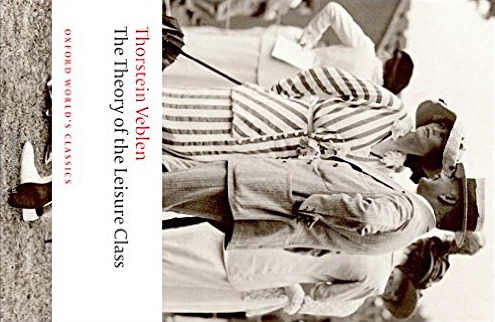
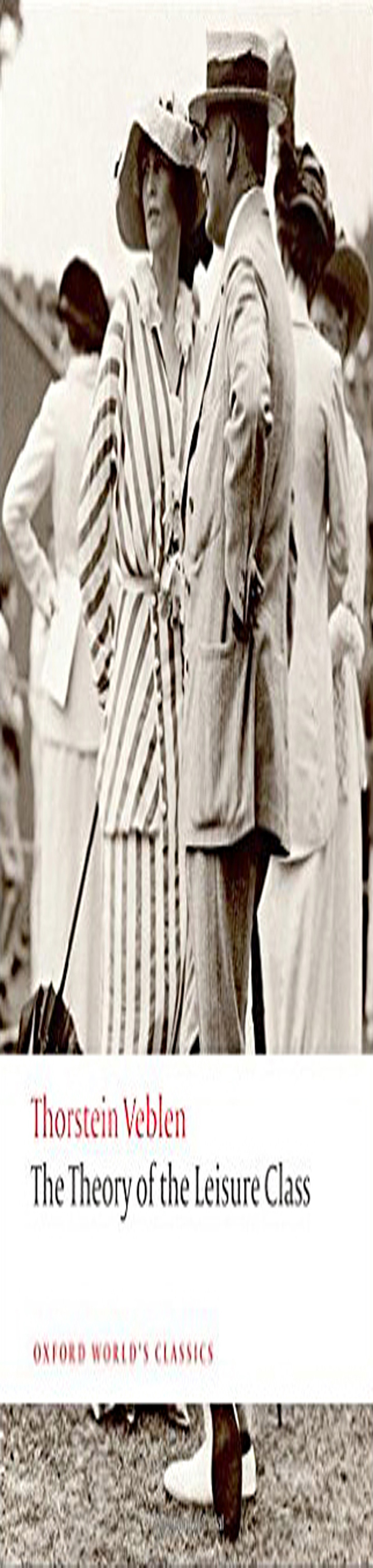 And thus Thorstein Veblen, in his introduction to The Theory of the Leisure Class, starts his essay on economics by contrasting three social classes of modern western culture : The Leisure Class or Predators, The Industrial Class or Producers, The Delinquent Class or Indigents & Criminals. Certainly a simplification of reality, but its broad strokes are a good generalization for illustrative purposes. He builds his argument from the traditional view point that praises exploit—the exploit of ruling power & warfare, belief systems & gambling, sport & distracting spectacle. World history and legend are filled with stories about these exploits, Odysseus, Alexander the Great, Kubla Khan, the Roman Empire, European imperialism, the contemporary financial system. These pursuits are purely nonproductive. They are brutal, overbearing, and barbaric : rule by force and fraud. He notes, as we entered modern times, this brutality became quasi-peaceable. Throughout, Veblen connects anthropology with economics, finding correlations between behavior and culture. He relates how today’s culture still honors invidious emulation, imitation driven by envy; and symbols of repute, busying oneself with non-productive pass times, conspicuous consumption (Veblen’s phrase), academics, sports, gambling, devout observances, pretentious manners, vogues, and other vain pursuits, such as writing editorials that no one reads, to support artificial status and maintain a stratified society based on dominance and submission.
. . .hunting and fighting are both of the same general character. Both are of a predatory nature; the warrior and the hunter alike reap where they have not strewn.
These predatory exploits have been given honorary status. Nobles are famed for their belligerence. It’s a sign of superiority to consume without producing, to live luxuriously without working, and to do it conspicuously in order to showoff to everyone your reputability. Accordingly this attitude implies that productive work and industrious labors are ignoble, low class. Through millennia of habit, it’s become accepted as normal and good. The conspicuous wealthy are to be seen as smart, deserving of their wealth, and deserving of our veneration. So much so that they don’t need to occupy themselves with anything productive (nor should they stoop so low). They are much too busy ruling, telling others what to do, how to do it (and reaping the profits); setting standards, showing the world what’s best, how to behave, what to believe, whom to emulate (others like them); showing off, displaying their wealth, building monuments (to themselves), giving to charity (to exculpate their guilt), and most of all, conspicuous consumption. He points out that wasteful consumption is replacing leisure as the primary “duty” of the rich.
Hence, under the competitive struggle for proficiency in good manners, it comes about that much pain is taken with the cultivation of habits of decorum; and hence the details of decorum develop into a comprehensive discipline, conformity to which is required of all who would be held blameless in point of repute. And hence, this conspicuous leisure of which decorum is a ramification grows gradually into a laborious drill in deportment and an education in taste and discrimination as to what articles of consumption are decorous and what are the decorous methods of consuming them.
Here we see his description of the establishment of “canons of taste” and etiquette. Those who belong to the clan have learned the right ways, and therefore are easily distinguished from those who don’t belong. Snobbery, hubris, and arrogance develop out of this preoccupation with being part of the in-crowd. The rest are servants that the predatory class exploits.
A divine assurance and an imperious complaisance, as of one habituated to require subservience and to take no thought for the morrow, is the birthright and the criterion of the gentleman at his best; and it is in popular apprehension even more than that, for this demeanour is accepted as an intrinsic attribute of superior worth, before which the base-born commoner delights to stoop and yield.
An explanation of the British attachment to their royalty, and in a more up to date version, our admiration of the super rich and the super fame of celebrities. He continues connecting our current traditions to archaic cultures and the maintenance of the established order. All good and well, until it becomes clear that in a modern industrial economy, these habits are inefficient and sorely dysfunctional.
. . . there is reason to believe that the institution of ownership had begun with the ownership of persons, primarily women. The incentives to acquiring such property have apparently been: (1) a propensity for dominance and coercion; (2) the utility of these persons as evidence of the prowess of their owner; (3) the utility of their services.
The tradition of slavery lives on in lesser developed parts of the world, as evidence for his accusations of archaic attitudes, and to a less obvious degree today in the treatment of low wage employees, in the off-shore outsourcing of the manufacture of goods, and the ever increasing consolidation of corporations into larger and larger conglomerates which put the control over resources into fewer and fewer hands.
Many and intricate polite observances and social duties of a ceremonial nature are developed; many organisations are founded, with some specious object of amelioration embodied in their official style and title; there is much coming and going, and a deal of talk, to the end that the talkers may not have occasion to reflect on what is the effectual economic value of their traffic. And along with the make-believe of purposeful employment, and woven inextricable into its texture, there is commonly, if not invariable, a more or less appreciable element of purposeful effort directed to some serious end.
A powerful comment on the inefficacy of charities and NGOs that attempt to justify their existence by their good intentions. It’s no accident that they never actually solve any problems. It would put them out of business if they did. The profits to be had in the franchise of not-for-profit is mind boggling. The hundreds of millions of dollars tossed around under the guise of helping the poor, ending poverty, ending hunger, improving lives, is disgraceful. The extravagant fundraisers, lavish displays of conspicuous consumption and waste, used as an excuse to motivate the rich to part with a few pennies, put on in the name of helping the less fortunate, is irony heaped upon contempt. Veblen, in his intensely overwrought manner, pounds these and other arguments through more than 250 pages of dense, academic, ornate language.
The thief or swindler who has gained great wealth by his delinquency has a better chance than the small thief of escaping the rigorous penalty of the law; and some good repute accrues to him from his increased wealth and from his spending the irregularly acquired possessions in a seemly manner.
The greatest, most dangerous thieves are those in non-productive, yet legitimate occupations, such as, sales, banking, law, advertising, that can whittle away mass quantities of money from millions of people with the blessing of the state. Not only is their fleecing of the masses considered good, the masses themselves heap praise upon the charlatans for their ingenious mounting of unearned wealth.
[in reference to women]. . . conspicuous leisure is much regarded as a means of good repute, the ideal requires delicate and diminutive hands and feet and a slender waist. These features, together with the other related faults of structure that commonly go with them, go to show that the person so affected is incapable of useful effort and must therefore be supported in idleness by her owner. She is useless and expensive, and she is consequently valuable as evidence of pecuniary strength. It results that at this cultural stage women take thought to alter their persons, so as to conform more nearly to the requirements of the instructed taste of the time; and under the guidance of the canon of pecuniary decency, the men find the resulting artificially induced pathological features attractive. So, for instance, the constricted waist which has had so wide and persistent a vogue in the communities of the Western culture, and so also the deformed foot of the Chinese.
Too often fashion and pop culture trends take on a life of their own. Crowd hysteria overrides individual prudence. What’s vogue is frequently silly, always contrived to stimulate wasteful consumption, and never for any communal benefit.
Hence it comes that most objects alleged to be beautiful, and doing duty as such, show considerable ingenuity of design and are calculated to puzzle the beholder—to bewilder him with irrelevant suggestions and hints of the improbable—at the same time that they give evidence of an expenditure of labour in excess of what would give them their fullest efficiency for their ostensible economic end.
Art, high-end products, decorative items, even intangibles like music and entertainment, all come under his attack. Who is to say what is beautiful or valuable? The “canons of taste” are set by those who throw the most money around. Was Picasso a greater artist than Jones? One thing is certain, the artists that Peggy Guggenheim collected are called great today. Look at any museum collection. The art had been acquired, not originally by museum curators or knowledgable artists, but from the collections of the prominent patrons of the arts. Had Peggy collected Jones instead, Picasso would be unknown, and the curators would ignore him just the same. Artist become great not because they are intrinsically great, rather, because they are collected by the rich. If one famous person puts their pronouncement of collectibility on artist Y, then deep pocket patsies will follow like lemmings to buy, and pump up the price of artist Y. (Then an equally talented nobody will start painting indistinguishable copies of Y. Who’s the great artist now?)
The consumption of expensive goods is meritorious, and the goods which contain an appreciable element of cost in excess of what goes to give them serviceability for their ostensible mechanical purpose are honorific.
So thoroughly has the habit of approving the expensive and disapproving the inexpensive been ingrained into our thinking that we instinctively insist upon at least some measure of wasteful expensiveness in all our consumption, even in the case of goods which are consumed in strict privacy and without the slightest thought of display.
This, along with the reverence of the good ol’ days, explains many fads. It explains why people will pay thousands of dollars for a handmade mechanical watch that will lose or gain more time in a day than an inexpensive electronic quartz watch will in a year. Or why expensive troublesome analog long-play records are considered better than digital recordings. Or why we’ll spend billions of dollars on a military option rather than make far less costly diplomatic and political compromises.
Institutions are products of the past process, are adapted to past circumstances, and are therefore never in full accord with the requirements of the present. This process of selective adaptation can never catch up with the progressively changing situation in which the community finds itself at any given time; for the environment, the situation, the exigencies of life which enforce the adaptation and exercise the selection, change from day to day; and each successive situation of the community in its turn tends to obsolescence as soon as it has been established. This is the factor of social inertia, psychological inertia, conservatism.
This is one of the core ideas in the book, that the traditions of the old guard are out of step with current needs, that conservatism is retrogressive and maladapted to the present conditions. But of course, the status of the wealthy and powerful is challenged by change. Modern industrial economics, and the cultural changes that have followed, and the further changes brought with information technology, all conspire to make adaptation necessary for the simple reason that the old ways are not serving us well—not even the rich, though they don’t see it—
If any portion or class of society is sheltered from the action of the environment in any essential respect, that portion of the community, or that class, will adapt its views and its scheme of life more tardily to the altered general situation; it will in so far tend to retard the process of social transformation. The wealthy leisure class is in such a sheltered position with respect to economic forces that make for change and readjustment of institutions. . .
The abjectly poor, and all those persons whose energies are entirely absorbed by the struggle for daily sustenance, are conservative because they cannot afford the effort of taking thought for the day after tomorrow; just as the highly prosperous are conservative because they have small occasion to be discontented with the situation as it stands today.
From this position it follows that the institution of a leisure class acts to make the lower classes conservative by withdrawing from them as much as it may of the means of sustenance, and so reducing their consumption, and consequently their available energy, to such a point as to make them incapable of the effort required for the learning and adoption of new habits of thought. The accumulation of wealth at the upper end of the pecuniary scale implies privation at the lower end of the scale.
It’s not hard to understand the resistance of the upper class to change. Their status was built on the past and shall remain intact as long as outmoded behavior remains in place. But even more disturbing is the deliberate holding down of the masses, or Veblen’s term predation, that in turn literally creates poverty. The creation of poverty is necessary to support the leisure class.
The guiding habits of thought of a devout person move on the plane of the archaic scheme of life which has outlived much of its usefulness for the economic exigencies of the collective life of today. In so far as the economic organisation fits the exigencies of the collective life of today, it has outlived the regime of status, and has no use and no place for a relation of personal subserviency. So far as concerns the economic efficiency of the community, the sentiment of personal fealty, and the general habit of mind of which that sentiment is an expression, are survivals which cumber the ground and hinder an adequate adjustment of human institutions to the existing situation. The habit of mind which best lends itself to the purposes of a peaceable, industrial community, is that matter-of-fact temper which recognises the value of material facts simply as opaque items in the mechanical sequence. It is that frame of mind which does not instinctively impute an animistic propensity to things, nor resort to preternatural interventions as an explanation of perplexing phenomena, nor depend on an unseen hand to shape the course of events to human use. To meet the requirements of the highest economic efficiency under modern conditions, the world process must habitually be apprehended in terms of quantitative, dispassionate force and sequence.
That paragraph may need a little translation. In short, superstition must give way to a scientific understanding of cause and effect. As humanity progresses with its technological capabilities and scientific knowledge, retrogressive thought patterns and pre-scientific superstitions no longer serve any sociocultural purpose—the old ways are maladaptive and hold us back from realizing human potential. It highlights the interconnectedness of the modern world and the need to take a global perspective of our behaviors.
The abolishment of slavery that started in Europe almost 200 years ago was the first giant step leading from a starkly stratified society to a more egalitarian one. This about-face on slavery was hotly debated and strongly opposed in the 1800s. Today we find it unquestionably unethical and unimaginably cruel to own persons, yet we still have an economy based on ownership, based on “superior and inferior, dominant and subservient persons and classes,” different in degree more than in kind. “It is in large measure an expression of the archaic habitual sense of personal status—the relation of mastery and subservience—and it therefor fits into the industrial scheme of the predatory and the quasi-peaceable culture, but does not fit into the industrial scheme of the present.”
His tirade goes on relentlessly. It gets tiring. Just when I was questioning whether to finish reading, I found myself masochistically looking forward to reading more. The nonstop lambasting eventually comes across as intensely sardonic. I couldn’t help laughing at times. And though he often back-peddles some of his strongest indictments, there’s no doubt left in the reader’s mind where he stands. His writing comes across laborious, old-fashioned, grossly tautological, and preposterously verbose. Yet, his ideas are pointedly current. Veblen apprehended over a century ago the inefficiency and futility of (invidious) competition, and the divisiveness of status and classism. He saw the forces holding society in the chains of conservative thought. He saw the coming trends pushing towards social ethics. It may raise an eyebrow to discover that The Theory of the Leisure Class was written almost 120 years ago, during the last decade of the 1800s, a.k.a. the Gay Nineties, a time of unbridled optimism, not unlike the Dot-Com boom of the 1990s. It was a time when technology was in an early growth spurt. They already had the fundamental knowledge that would go on to become commercial radio, television, satellites, internet, cellphones, . . And it may raise another eyebrow to realize how much attitudes and behavior have not changed since then. The obstinance of the predatory class is tenacious. More than that, the book potently demonstrates how resistant society in general is, against its own best interest, at coming to terms with the revolutionary reshaping of our cultural landscape brought about by the modern advances in science, technology, transportation, and communication. The central question he raised back then, remains with us today : When will we catch up with ourselves?
The Theory of the Leisure Class, Thorstein Veblen, Oxford World’s Classics, (first published 1899)